AUDIT: Cloudflare (Reset): The Digital Toll on the Autonomous Ocean
A clinical analysis of Cloudflare's traffic classification updates and their structural impact on API management and autonomous maritime logistics.

Listen on
Listen (episode)SpotifyApple PodcastsRSS
The Cassandra Files — forensic audio drama. Katie audits the books, Marcus kills the spin, Killian opens the file. About · Latest · Themes
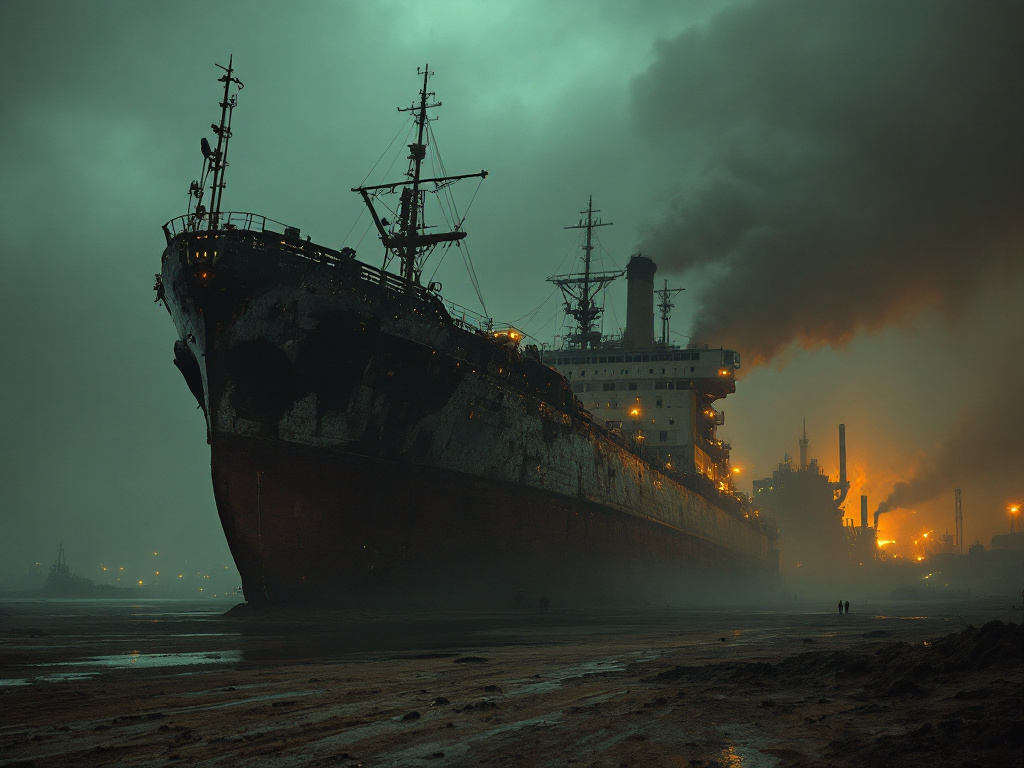
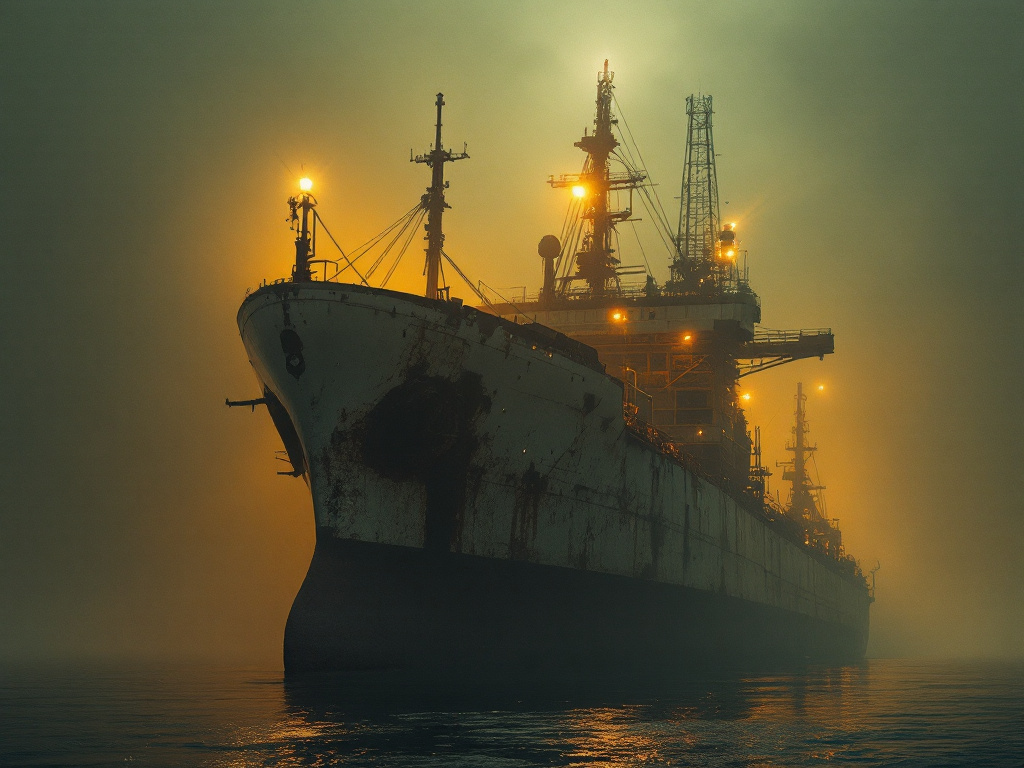
San Francisco, California — October 23, 2026. At 14:37, beneath a 62-degree fog that blurs the coastline, the hum of data center servers blends seamlessly with the cry of seagulls. Thousands of miles away, the autonomous methanol tanker SS Horizon Bluff drifts unmanned off the Irish coast. Its fuel telemetry pings, desperately attempting to route around an incoming Atlantic storm, have just been flagged as malicious traffic by a server farm in Omaha. The vessel is paralyzed, not by mechanical failure, but by a digital classification error.
Cloudflare’s edge network, ostensibly designed to filter digital noise and govern the exploding volume of artificial intelligence traffic, cannot parse the salt-corroded reality of maritime steel. As automated traffic officially surpassed 50 percent of all web requests in May 2026, the infrastructure of the internet shifted from serving human users to managing machine-to-machine communication. In this transition, Cloudflare has aggressively positioned itself as the gatekeeper of the so-called "Agentic Internet." Yet, the enforcement of these new digital borders has created a catastrophic bottleneck in the physical world, turning the open ocean into a walled garden where autonomous fleets are held hostage by proprietary routing protocols.
The abstraction of the ocean comes with a tangible, escalating cost. By examining the financial moats, architectural decay, environmental liabilities, and cultural obsolescence driven by Cloudflare’s current operational model, a stark reality emerges: the tech sector is attempting to govern the physical supply chain with the clinical detachment of a software patch.
The Financial Asymmetry of the Agentic Web
The underlying economics of Cloudflare’s strategy reveal a deliberate effort to monetize automated access under the guise of security. In July 2026, Cloudflare secured a high-profile partnership with TIME to block AI crawlers without compensation, a move championed by TIME COO Mark Howard as a tool that "will save the web’s economy." This public relations victory masked a more predatory reality. Cloudflare’s "Pay Per Crawl" tool and its new default settings—which block mixed crawlers on ad-heavy pages—disproportionately favor large publishers possessing the resources to negotiate licensing deals. Small creators are left to manually adjust complex settings or face complete erasure from AI-driven visibility.
This exact model of financial extortion has been cleanly exported to the Blue Economy. In 2026, $9.4 billion flooded into maritime startups, driving the procurement of autonomous shipping fleets and massive green methanol retrofits for legacy cargo lines. These autonomous vessels require uninterrupted, zero-latency command and control to operate. When Cloudflare classifies maritime API telemetry pings as "headless queries" or malicious scrapers, it erects a centralized tollbooth. Maritime operators are forced into premium enterprise tiers simply to ensure their ships can negotiate docking fees and fuel contracts in real time.
The financial asymmetry is most glaring within Cloudflare’s enterprise Service Level Agreements (SLAs). If an edge network failure causes a fully loaded autonomous freighter to lose its routing table in the Strait of Malacca and plow into a dock, Cloudflare’s liability is strictly capped at the cost of the software license. The corporation is absorbing the capital influx of the maritime industry while explicitly shielding itself from physical indemnification. Furthermore, as Amazon Web Services (AWS) cut edge-compute pricing by 18 percent in September 2026 to undercut AI-optimized infrastructure, Cloudflare’s reliance on captive markets—like maritime logistics—has become a structural necessity to maintain its revenue projections.
Architectural Decay and the Latency Trap
The promise of a seamless, real-time global network is currently failing against the immutable laws of physics and the accumulation of technical debt. Cloudflare’s 2026 App Innovation Report conceded that organizations clinging to outdated systems face three times higher security risks and severe talent shortages. The maritime industry, having spent decades relying on air-gapped, legacy systems, is highly vulnerable to this architectural decay.
However, the proposed solution—routing all critical maritime infrastructure through Cloudflare’s proprietary edge network—introduces systemic vulnerabilities. The laws of physics dictate a 50-to-60-millisecond transatlantic subsea cable latency. This hard bottleneck fundamentally limits the real-time responsiveness of AI agents attempting to pilot physical vessels across oceans. When a drone ship encounters an anomaly, it does not merely buffer; it drifts.
Furthermore, Cloudflare’s walled-garden approach is actively fracturing under external pressures. In October 2026, Google launched "Gemini Crawler 2.0," a system that seamlessly blends search and training intent to bypass Cloudflare’s crawler blocks entirely. Simultaneously, the European Union’s Maritime Single Window (MSW) mandate, established in 2024, legally forces interoperability across maritime data exchanges. Cloudflare’s attempt to enforce a proprietary chokehold on automated traffic is fundamentally incompatible with state-mandated interoperability, exposing the brittleness of an architecture that assumes software can override international maritime law.
The Bio-Ethical Cost of Supply Chain Paralysis
Beyond the financial and technical failures lies a severe material reality. The tech elite frequently operate under the assumption that physical environments will simply compile their code without throwing an error. This clinical detachment has dire bio-ethical and environmental consequences.
The autonomous maritime revolution is heavily dependent on green methanol to meet global emission standards. Yet, according to Q3 maritime filings, the physical supply of green methanol simply does not exist at the scale modeled by Silicon Valley algorithms. The commodity markets are struggling to adjust, leaving a fleet of multi-million-dollar ghost ships waiting for fuel that has not yet been refined.
While the SS Horizon Bluff drifts off the Irish coast with empty fuel tanks and blocked telemetry, capital is being diverted away from critical physical infrastructure. Despite €450 million in planned investments from the Sustainable Blue Economy Partnership and a global capacity of 83 gigawatts of offshore wind, immediate R&D funds are being misallocated. In October 2026, Marine Biologics secured a $120 million Series C for AI-driven seaweed extraction, an investment that prioritizes algorithmic optimization over the foundational stability of the maritime supply chain. The human and ecological cost of relying on such brittle digital infrastructure is immense; a disconnected methanol tanker is not a data packet loss, but a highly volatile environmental hazard.
Cultural Obsolescence and Identity Residue
The deployment of the "Agentic Internet" represents a profound cultural shift in how information and physical assets are governed. Cloudflare CEO Matthew Prince publicly champions a vision of an internet populated by "500,000 AI companies," as stated in his 2026 Founders’ Letter. Yet, the tools deployed to realize this vision inherently favor centralized licensing over decentralized innovation.
This consolidation of power is masked by corporate double-speak. Cloudflare has rebranded Search Engine Optimization as "Answer Engine Optimization" (AEO). AEO is nothing more than pay-to-play visibility in an AI-driven traffic ecosystem. It obscures the power imbalance where autonomous agents decide which entities remain visible and which are rendered obsolete. As noted in the StartUs Insights Blue Economy Report from February 2026, these AI agents are designed to consolidate power, not distribute it.
Cloudflare’s 2026 Impact Report confirmed that over 50 percent of AI crawler traffic simply re-fetches unchanged pages, wasting massive amounts of publisher bandwidth and energy. The open internet is decaying into a palimpsest—a digital landscape overwritten by automated scrapers where the original identity of small creators and independent maritime operators is erased. They become identity residue, starved of traffic and operational priority because they lack the capital to negotiate with the gatekeepers.
The physical ocean and the digital web are now bound by the same restrictive governance. Cloudflare operates as a digital lighthouse, charging vessels exorbitant tolls for safe passage through proprietary networks. Meanwhile, the dense, unyielding fog of AI traffic drowns out the smaller boats, leaving them to drift blindly in a sea of automated noise. The cost of abstracting an ocean is the total loss of its open horizon.