AUDIT: Umicore / Li-Cycle: The Black Mass Mirage: Capital Decay in the Blue Economy
An analytical audit of Umicore and Li-Cycle's lithium-ion recycling operations, examining how state subsidies and sovereign risk mitigation serve as a strategic institutional moat against foreign refining monopolies.


Listen on
Listen (episode)SpotifyApple PodcastsRSS
The Cassandra Files — forensic audio drama. Katie audits the books, Marcus kills the spin, Killian opens the file. About · Latest · Themes
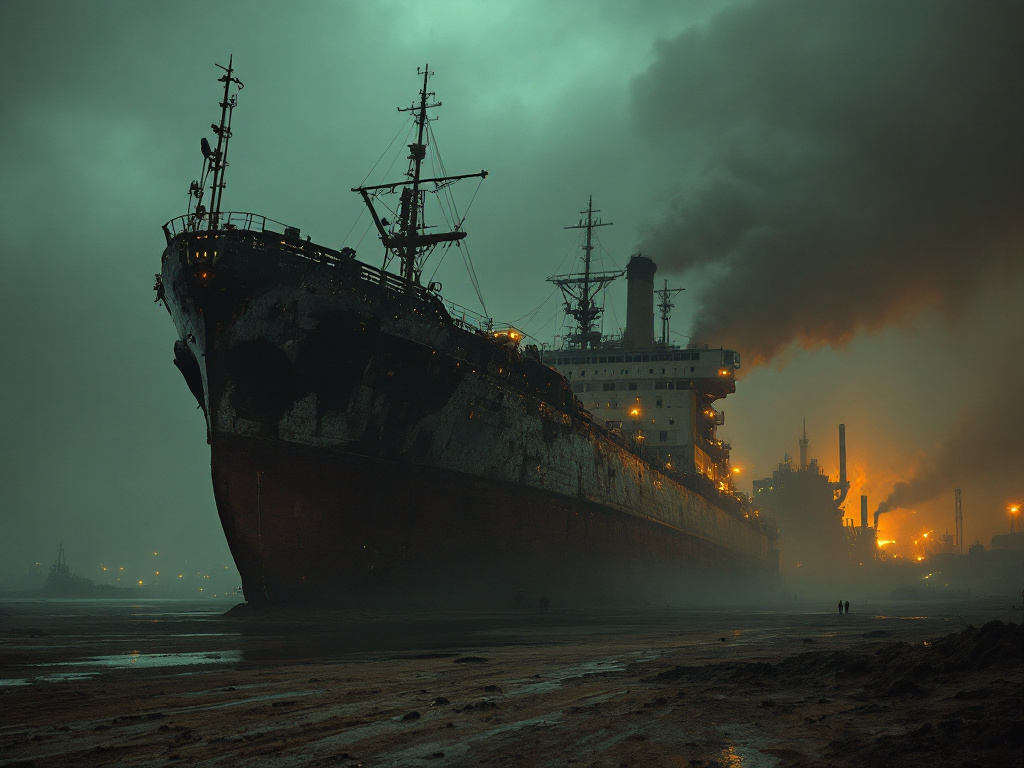
Hoboken, Belgium — October 26, 2026. 14:30. 54°F, overcast. Smelter stacks loom over the Scheldt, casting long, industrial shadows across a waterway that serves as the primary artery for Europe’s so-called circular economy. Here, the metallic tang of ozone hangs heavy in the air, a physical manifestation of a sector hemorrhaging liquidity. The promise of the Blue Economy—a sustainable, closed-loop system of resource recovery—has devolved into a theater of industrial stagnation.
At the center of this structural decay are Umicore and Li-Cycle, two entities that positioned themselves as the vanguard of global lithium-ion battery recycling. The official industry narrative projects a $37.5 billion market by 2035, driven by an impending tsunami of electric vehicle adoption. The live reality of 2026, however, exposes a systemic fault line. Rather than operating as domestic technological marvels, Western pure-play recyclers function as heavily subsidized logistics nodes. They are engaged in a brute-force financial clearing exercise, masking high processing costs and technological deficits with corporate double-speak, while quietly exporting toxic liabilities through global maritime channels. This is a gold rush where the pickaxes are made of debt.
The Ledger of Distressed Assets
A forensic accounting of the sector reveals a landscape defined by sovereign risk mitigation rather than commercial viability. In 2025, the global lithium-ion recycling market was valued at a modest $5.8 billion. Yet, the capital expenditures required to capture this market have triggered a wave of corporate insolvencies. Li-Cycle’s trajectory serves as the definitive autopsy of the pure-play recycling model. Once boasting a multi-billion-dollar valuation predicated on a highly scalable "spoke-and-hub" architecture, the company collapsed into bankruptcy in 2025.
The subsequent $40 million distress sale to Glencore in February 2026 contradicts every previous assurance of supply chain resilience. Glencore’s acquisition, executed via a convertible note, was a masterclass in distressed asset recovery. By stepping in when Li-Cycle’s founders exited pre-bankruptcy, Glencore acquired a fully permitted footprint and a strategic foothold for a fraction of the original build cost. They did not acquire a functioning closed-loop ecosystem; they acquired salvage rights to a financial crime scene.
The financial hemorrhage is inextricably linked to volatile macroeconomic realities. Metal prices—specifically lithium, cobalt, and nickel—have plummeted 30% from their 2022 peaks. Consequently, Li-Cycle’s flagship Rochester Hub remains paused, its $475 million Department of Energy loan undrawn. Halting construction was a mathematical necessity to preserve remaining liquidity as the burn rate accelerated.
Across the Atlantic, Umicore’s October 2025 expansion of hydrometallurgical capacity in Europe is similarly propped up by state intervention. While the corporation publicly commits to "sustainable refining," the operation survives entirely on European Union capital injections. These subsidies represent a strategic institutional moat, a premium paid by the state to ensure domestic recovery of critical metals and avoid political embarrassment. Stripped of government handouts, the underlying margins are bleeding out on the ledger.
Architectural Ruin and the Hydrometallurgical Deficit
The technical debt of the battery recycling sector is staggering. The heavily marketed spoke-and-hub model was pitched as a highly efficient logistics network, designed to aggregate localized battery waste into centralized refining facilities. In practice, it is a failed digital transformation framework misapplied to heavy industry. The architecture demands a constant, high-volume influx of feedstock, but EV adoption has proven significantly slower than projected. Transport costs have subsequently eaten the margins alive, rendering the localized network structurally dead before the concrete at facilities like the Rochester Hub even cured.
Compounding this architectural failure is the fundamental physics of the extraction process. Western operators champion hydrometallurgy for its theoretical purity and yield. However, the energy intensity required to recover cobalt and nickel at a molecular level cannot compete with the cheaper pyrometallurgical processes deployed in Asia.
While Redwood Materials launched a $3.5 billion Nevada facility in November 2025 to force closed-loop cathode production, the broader Western market remains paralyzed by this hydrometallurgical deficit. The yield data demonstrates that operators are recovering just enough material to justify the next massive grant application. The technology to extract lithium carbonate and battery-grade nickel exists, but it requires a ruthless operational environment capable of absorbing initial capital shocks—an environment that current pure-play recyclers simply do not possess.
Maritime Arteries and the Black Mass Exodus
The most damning evidence of this systemic failure is found not in the quarterly earnings reports, but in the shipping manifests. The jargon of the sector relies heavily on the term "Black Mass"—the partially processed, highly toxic sludge created when dead lithium-ion cells are crushed. The official claim from entities like Umicore is that closed-loop recycling ensures supply chain resilience. The reality is a massive, unidirectional capital flight across the ocean.
Instead of refining this material domestically, Western recyclers pack up thousands of tons of Black Mass and ship it straight to the Chinese BRUNP-GEM duopoly. In 2025, BRUNP-GEM captured 78% of global black-mass pre-treatment capacity; by 2026, they control an overwhelming 89% of global refining capacity. Shipping Black Mass to China for pyrometallurgical refining is the only mechanism maintaining market efficiency at scale.
This offshore dumping relies heavily on maritime logistics, tracked relentlessly by deep-sea data cables that monitor the cross-border flow of hazardous waste. To obfuscate this dependency on foreign refining, Western entities have weaponized corporate double-speak, patching their public deficits with green maritime refueling promises. Extravagant projections regarding autonomous ship margins and green methanol refueling are integrated into sustainability reports. These are synthetic narratives—distractions designed to hide the fact that the core business model relies on diesel-burning freight vessels exporting toxic sludge to a geopolitical rival. The deep-sea infrastructure does not record a circular economy; it records the precise coordinates of Western industrial surrender.
The Biological and Cultural Residue of Obsolescence
Beyond the financial and technical collapse lies a profound bio-ethical crisis. The material flow of the battery recycling industry represents a toxic taxonomy. The state subsidizes electric vehicle manufacturing on the front end to project environmental stewardship, only to pay a premium to export the chemical poison when the cells reach obsolescence.
The 2026 EU Battery Regulation mandates a 70% lithium recovery rate by 2030, a legislative framework that fundamentally lacks the enforcement mechanisms necessary to prevent the continued export of Black Mass. The regulation creates a vacuum where compliance is achieved through creative accounting rather than clinical efficacy. The human cost of handling this toxic slurry is outsourced to jurisdictions where intellectual and biological labor laws do not apply, cleanly separating the Western consumer from the violent reality of chemical extraction.
Culturally, the abandoned facilities and unbuilt hubs serve as a palimpsest of the green energy transition. The Rochester Hub is a monument to media decay and corporate illusion—an empty silo that promised a pristine technological marvel but delivered only industrial theater. The identity residue of millions of dead media devices and electric vehicles is crushed into a palatable slurry, stripped of its context, and monetized in the dark.
The battery waste crisis requires brute-force clearing. It requires operators to haul the rot out by hand, shovel by shovel, until the concrete is clean. But pure-play recyclers have proven themselves to be little more than glorified scrap dealers, charging premium rates to move the rot from one corner of the ledger to another. Until the structural honesty of the sector aligns with the macroeconomic reality of physical extraction, the Blue Economy will remain an open wound—bleeding capital, exporting obsolescence, and leaving the market holding the invoice for a future that was never built.