AUDIT: Rio Tinto: The Thermodynamic Lie of Mineral Security
An analytical review of Rio Tinto's Q3 2026 filings, examining multi-jurisdictional ESG compliance frameworks, the START traceability initiative, and structural capital allocation in global mining.


Listen on
Listen (episode)SpotifyApple PodcastsRSS
The Cassandra Files — forensic audio drama. Katie audits the books, Marcus kills the spin, Killian opens the file. About · Latest · Themes
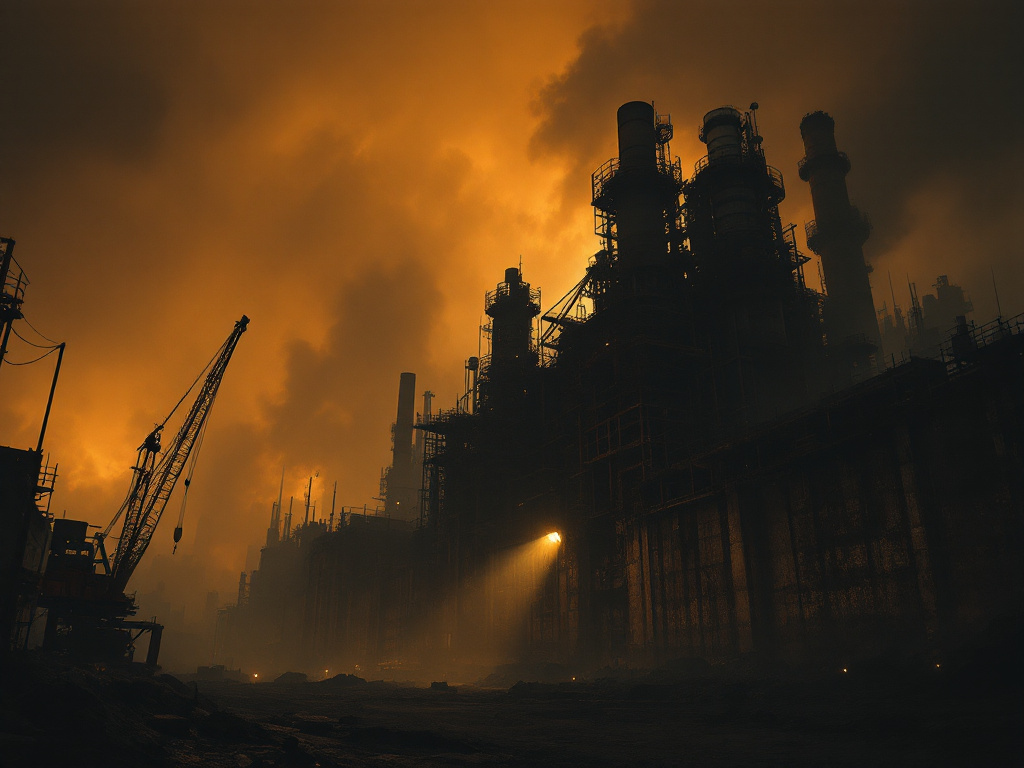
Perth, Australia — August 25, 2026. The local time is 14:32, the temperature rests at a mild 68 degrees Fahrenheit, and the sky is partly cloudy. Yet, along the industrial corridors, smelters hum relentlessly under a permanent haze of diesel and dust. The atmosphere resembles a highly regulated casino where the house always wins, but the chips are forged entirely from conflict minerals. Behind the corporate curtain of global mining conglomerates, a profound structural fracture is widening. It is the exact point where the geopolitical promises of green energy transitions collide with the unyielding physics of mineral extraction.
At the epicenter of this fracture sits Rio Tinto. Officially, the multinational corporation is executing a doctrine of "strategic portfolio optimization," a phrase heavily utilized in 2026 reporting by CEO Jakob Stausholm to project disciplined capital allocation. Forensically, this terminology serves as a sophisticated mechanism to delay capital-intensive greenfield projects while extracting maximum residual value from aging assets. As the global market demands unprecedented volumes of critical minerals, Rio Tinto’s balance sheet reveals a glaring paradox: a 22 percent surge in environmental, social, and governance (ESG) compliance costs that severely squeezes margins without altering the fundamental thermodynamic reality of its core operations. The corporate ledger is being balanced not through operational breakthroughs, but through a process of algorithmic appeasement.
The Cost of Algorithmic Embalming
The official corporate narrative, anchored by the sustainability report's pledge to achieve "net zero emissions by 2050," presents a company aggressively decarbonizing its supply chain. The 2026 live reality dictates otherwise. Scope 1 and Scope 2 emissions remain overwhelmingly reliant on fossil fuels, masked by localized, highly publicized pilot programs.
At the Oyu Tolgoi operation in the Gobi Desert, battery-swapping trials for the heavy fleet are currently ramping up. While presented as a triumph of sustainable engineering, these electric vehicles serve primarily to mathematically offset localized carbon output on paper. It is a practice best categorized as algorithmic embalming—isolating fossil fuel reliance into manageable data silos to prevent institutional panic from sovereign wealth funds. The smelters continue to burn the same volume of coal and diesel required to process copper, but the reporting structure acts as a strategic information filter. By demonstrating a localized emissions drop, the overarching ESG rating holds, debt covenants are satisfied, and capital continues to flow from institutional shareholders who require clean compliance boxes more than clean air.
This paper-driven transition extends to the START™ initiative, which bullish market analysts at Farmonaut project will dominate the traceability of critical minerals by 2030. Pitched as an immutable, end-to-end provenance architecture, the initiative provides the exact algorithmic transparency institutional capital demands before authorizing further expenditures. However, tracking how a corporation manages emissions across a blockchain ledger does not change the physical energy required to crush rock. It merely repackages dirty extraction methods within modern accounting software, substituting thermodynamic efficiency with digital telemetry.
Operational Anchors and Geopolitical Sandpits
Nowhere is the disconnect between capital allocation and physical reality more evident than in South Africa. Market sentiment recently registered cautious optimism following the approval of a $473 million investment in the Zulti South project. Designed to secure high-grade feedstock for the Richards Bay Minerals operation, the project operates on a rigid 30-month construction timeline, targeting Q4 2028 for initial production.
However, this timeline is severely bottlenecked by regional geopolitical instability and the African operational track record of its primary contractor, China Harbour Engineering Company (CHEC). More critical than the geopolitical sandpit is the inescapable law of physics. Titanium dioxide (TiO₂) rutile extraction efficiency is rapidly plateauing at Zulti South. As the ore grade drops, the joules of energy required per ton of extracted mineral increase exponentially.
Rio Tinto’s filings claim the capacity to execute this extraction—framed around a "24-year operational commitment," per Discovery Alert—while simultaneously adhering to zero-carbon pledges. This represents a physical impossibility. Separating low-grade rutile from massive volumes of waste sand demands a catastrophic thermal load. By blaming statutory delays on environmental permitting and community stakeholder reviews, the corporation weaponizes regulatory friction as a shield. The ESG compliance bottleneck provides a highly convenient cover for the brutal geological reality that the extraction thermodynamics at Zulti South are currently unprofitable.
Apex Predators in a Shrinking Moat
As Rio Tinto attempts to navigate these internal thermodynamic failures, the external geopolitical battlefield is tightening. The corporation’s market moats are under sustained assault by apex predators operating with superior cost efficiencies or strategic state backing.
BHP remains a formidable adversary. While maintaining a joint venture with Rio Tinto on the Resolution Copper project, BHP utterly dominates the Pilbara iron ore region with significantly lower-cost operations. Meanwhile, Sibanye-Stillwater executed a definitive pivot toward United States platinum group metals (PGM) assets on March 31, 2026. This strategic maneuver directly undercuts Rio Tinto’s broader lithium ambitions by securing critical North American supply chains before Rio can establish a dominant foothold.
The most systemic threat to refinery monopolies stems from China Baowu Steel Group. Although officially a partner in Rio Tinto’s $1.3 billion Western Range project, Baowu is highly vertically integrated. This partnership forces Rio Tinto to share critical infrastructure with a sovereign-backed entity capable of bypassing traditional Western pricing models. The broader macroeconomic vulnerability is starkly quantified by the Bipartisan Policy Center’s April 2026 analysis: Project Vault’s $12 billion public-private critical minerals reserve remains drastically underfunded when positioned against China’s $50 billion strategic stockpile. Rio Tinto is attempting to maintain a monopoly in a market where sovereign adversaries possess four times the capital reserves.
The Illusion of Strategic Portfolio Optimization
To maintain shareholder confidence amidst these systemic fault lines, executive leadership relies heavily on the rhetoric of portfolio optimization. CEO Jakob Stausholm is placing aggressive bets on lithium and the Simandou iron ore project, where Rio Tinto recently partnered with 4Winds Contracting for Oak Flat stewardship. Yet, Stausholm faces immense institutional pressure to return cash to investors via buybacks, anchored by the expectation of maintaining yields comparable to the $1.42 per share dividend issued in 2025.
This demand for immediate capital return fundamentally starves greenfield development. The $1.3 billion Western Range project is touted in the Annual Report as being on time and on budget, yet parallel initiatives like the Brockman Syncline 1 project have been quietly delayed to 2027 due to permitting issues. Similarly, the Resolution Copper project remains paralyzed by Southeast Arizona Land Exchange bottlenecks. Corporate initiatives branded as "nature-based solutions" or "co-design with tribes" function less as ethical pivots and more as permitting appeasement—tactics designed to stall regulatory action while the company milks its aging, high-yield assets.
Furthermore, the corporation’s M&A strategy is facing unprecedented institutional friction. On March 30, 2026, proxy advisor Glass Lewis publicly opposed Eldorado Gold’s $3.8 billion CAD takeover bid for Foran Mining. While not a direct Rio Tinto acquisition, the Glass Lewis rejection sends a chilling signal across the sector regarding the viability of debt-leveraged consolidation. It contradicts Rio Tinto’s official narrative that large-scale portfolio optimization will be smoothly absorbed by the market.
Even the corporation’s technological claims are heavily inflated to appease investors. Official literature states that automation reduces operating expenses by 15 percent. However, the forensic reality shows that the LiDAR and artificial intelligence exploration technologies expected to deliver these savings—such as those deployed at Majuba Hill—remain strictly in the pilot phase. The projected OPEX reductions are forward-looking models, not realized balance sheet assets.
The Terminal Ledger
The global transition toward critical minerals cannot be engineered through press releases or blockchain traceability architectures. A 22 percent increase in ESG compliance costs does not extract rutile from depleting sand, nor does it power the heavy concentrators required to refine copper in the Gobi Desert.
Rio Tinto is currently executing a masterclass in institutional farm-cycle management, utilizing algorithmic embalming to secure credit ratings while the physical infrastructure strains under the weight of declining ore quality. The smelters in Perth will continue to hum, fueled by diesel and obscured by dust, so long as the localized telemetry satisfies the debt covenants. But financial models cannot outrun the laws of physics. The mining industry remains a casino built on conflict and carbon, and while the house always wins in the short term, the thermodynamic bill is inevitably coming due.