NOTES: Ayar Labs: Silicon Photonics’ Expensive Banana Stand
Ayar Labs is pitching a pristine glass highway, but it’s just the tech sector's most expensive banana stand. We unpack the great photonics meltdown.

The Cassandra Files — forensic audio drama. Katie audits the books, Marcus kills the spin, Killian opens the file. About · Latest · Themes
# The $3.75 Billion Banana Stand: Ayar Labs and the Great Photonics Meltdown
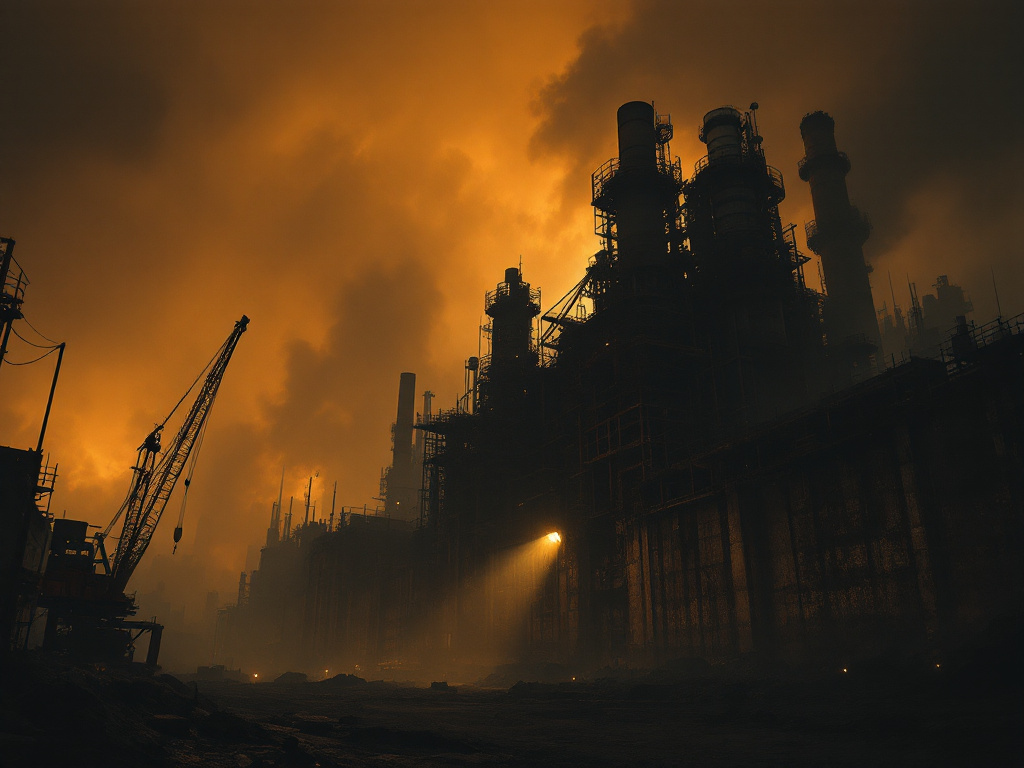
Right. Let’s talk about heat. Not the metaphorical Silicon Valley heat, but the real, literal, sweating-through-your-shirt kind. The kind that makes a data centre feel less like a server farm and more like the inside of a furnace. At a certain speed, copper wire stops being a conduit for data and becomes a very expensive heating element. It’s physics. It’s a bugger.
And into this meltdown waltzes Ayar Labs, talking a big game about a ‘Death Warrant for Copper.’ They’re selling a pristine vision: a beautiful glass highway for data, built to float serenely over our melting copper city.
The Official Story (The Spin)
According to the PowerPoint, Ayar Labs has the cure. They call it Silicon Photonics. By turning electrical signals into light right on the chip, they promise to obliterate the bottlenecks holding back the AI boom. They’re shipping “production-ready” solutions, backed by the Holy Trinity of Nvidia, Intel, and AMD, and are valued at a tidy $3.75 billion.
It’s a glorious, sci-fi narrative. It’s also, I reckon, a load of dinkum.
The Real Story (The Pulse)
This isn’t a revolution; it’s a shell game. You don’t have to look hard to see the grimy truth sweating under the Computex glitter.
* The ‘Production-Ready’ Lie: Their version of “production-ready” is what you or I would call “a few thousand engineering samples.” Their grand target of 100 million units a year is a 2028 fever dream. Why? Because you can’t automate the testing. It’s a manual, painstaking, unscalable process. It’s a bespoke facade, like one of Katie’s content factories, that will collapse under the weight of its own ambition.
* The Thermal Shell Game: They haven’t solved the heat problem; they’ve just moved it. These optical chips are built with things called micro-ring modulators, which are so thermally sensitive that a stiff breeze could knock them offline. The solution? Slap on complex, power-hungry liquid cooling systems. You’re trading the heat from the copper wire for the heat from the bloody life-support machine needed to keep the new tech from having a seizure.
* The Integration Black Hole: You can’t just plug this gear into your existing AI cluster. Oh no. That would be too easy. It requires a complete, capital-destroying ASIC redesign. And those big-name "partners"? They’re hedging their bets, pouring billions into their own in-house photonics. It’s not an ecosystem; it’s an exit strategy.
The Bottom Line
This whole venture gives me flashbacks to the humidity in Tokyo, right before the market took a dive in '18. That same feeling of unprotected exposure, of a system lying to itself about its own stability.
Ayar Labs has a $3.75 billion valuation for what is, in July 2026, a science project with a crippling manufacturing problem and a fatal thermal flaw. This isn’t the future. It’s the tech sector’s most expensive banana stand. There’s always money in it, until the whole thing burns down and the common people are left holding the bag.